
YU Sleep Review: Mild Drops to Help You Fall and Stay Asleep
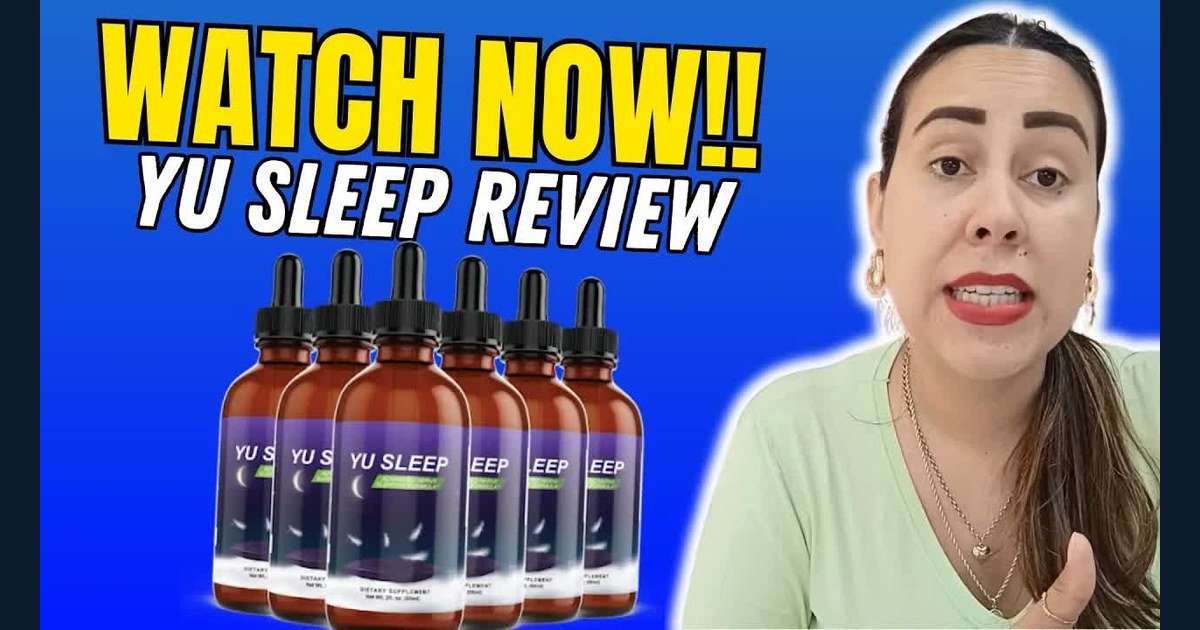
Look closely at how most supplements in this bracket are sold and you will notice they are engineered to never let you leave. A recurring charge, a stored card, a bottle that turns up every thirty days - and a customer who dare not stop, because the moment they do the old trouble walks back in. The whole thing rests on your continued need.
What YU Sleep proposes is the mirror image of that, and I would call it the nerviest position anyone in this aisle has taken. Its page draws a comparison to rehab after a fracture: relief arrives inside a few days, yet the actual mending - rebuilding the sleep pressure system from the ground up - wants three to six months of steady dosing. Once that is done, the page argues, what you have gained stays gained. You finish it rather than renew it.
Follow that idea and you find it stamped on every decision the label makes, which is precisely why the product warrants more of your attention than the bottles sitting either side of it.
One figure that sets it apart from the rack
Melatonin, 0.9 mg per serving.
Browse a pharmacy shelf and the melatonin you will find comes dosed at 3, 5 or 10 mg. What is offered here is a shaving off even the lowest of those, and the choice is entirely intentional. Load up on melatonin and it acts like a switch thrown - you go under quickly, then pay for it with the morning haze that pushes most buyers to abandon ship before the month is out.
This formula takes the opposite tack: a faint melatonin cue with nine further components stationed around it to hold up the neighbouring systems, in place of a single heavy hit bulldozing through them. Whether that fits you turns wholly on your reason for buying. Chasing oblivion in ten minutes flat? This was built to not do that. After mornings where your head is clear? Then here is the case for it.
The ten, and what each one is doing
| Ingredient | What the page has it there for |
|---|---|
| Red tart cherry extract | The formula's headline botanical - sleep-wake regulation and total sleep time |
| 5-HTP | Serotonin production, which sits upstream of melatonin |
| Vitamin B6 | Cofactor for that conversion - part of why the low dose can work at all |
| Vitamin B2 | Circadian rhythm support alongside B6 |
| Magnesium glycinate | The well-absorbed form; aimed at the restorative stages rather than onset |
| Apigenin | The compound behind chamomile's reputation - time to fall asleep |
| Lemon balm | Cortisol, which is the page's explanation for the 3am wake-up specifically |
| L-theanine | Alpha brain waves - calm without sedation |
| Melatonin | 0.9 mg. The signal, not the sledgehammer |
| GABA | Quieting the overactive brain that keeps the ceiling interesting at 2am |
The pair that slip past everyone
Scan the ingredients and B6 and B2 come across as makeweights, yet they are the very reason everything else pulls its weight. Turning serotonin into melatonin cannot happen unless both are on the scene. Remove them and your 0.9 mg of melatonin amounts to nothing more than a small dose; keep them and that same small dose lands inside machinery purpose-built to exploit it. Right there sits the line between a formula somebody actually engineered and one cobbled together out of whatever names test well.
Which of the three problems you actually have
What we lump under one label is nearly always three distinct troubles sharing a name, and none of them clears up on the same clock:
- Getting to sleep. The onset side - theanine, apigenin, lemon balm. This is the part that moves first, sometimes within the opening few nights.
- Staying asleep. The 3am problem, which the page pins on a cortisol spike. Lemon balm, GABA and magnesium point here. Slower.
- Sleeping through and still waking flat. Sleep architecture. This is the one the page is truly selling, and it is the slowest of the three by a wide stretch.
Pin down which of the three is yours and you will know whether a month of trial proves anything at all. Should it be the first, the answer arrives fast. Should it be the third, a month barely registers as evidence - and that void is exactly the gap the guarantee is meant to fill.
Two months guaranteed against a three-to-six-month plan
Rarely does a sales page state so flatly that thirty days will not cut it, and the reasoning it gives is its own: bail at one month and you have tasted the gain without cementing it, the night-waking creeps back, and you write the product off as a dud when the truth is you quit too soon. The logic holds, and it may well be the straightest passage on the whole page.
Set that against the refund and the two do not fit. Sixty days, no questions asked - that is the cover. Two months of protection wrapped around a regimen the page itself brands a three-to-six-month affair. Assess the product on the page's own terms and you are assessing it after the refund door has already clicked shut, which quietly hands the sixty-day mark the role of the true point of no return, whatever the printed instructions preach.
Why the smallest package is two months
That two-month floor is defended with the same rehab reasoning: quit at the one-month line and you have felt the lift without pinning it down. Argue with the logic if you like, but the upshot lands on your side - the tiers worth buying are the ones long enough to genuinely carry out the reset on offer, and the price per bottle tumbles hard as you scale the supply up.
Cost per night, cost per package
| Package | Per bottle | Total | Shipping | Bonuses |
|---|---|---|---|---|
| 2 months | $69 | $138 (list $198) | Extra | No |
| 3 months | $59 | $177 (list $297) | Free | Yes |
| 6 months | $39 | $234 (list $594) | Free | Yes |
Run the six-month tier out per night and it settles near $1.30, a figure best measured not against the price tag but against what a wrecked night quietly extracts from you the day after.
The bigger tiers arrive with three extras bundled in: Dr. Collins' Wind Down Routine Bundle, eleven bedtime stories delivered as ebook and audio, put at $97 on the page; an anti-ageing ebook going by Younger and Happier While You Sleep; and a slim guide to the late-evening snacks the author reckons are quietly firing off that 3am wake-up. Of the three, that final one is the sole bonus that earns its keep even if the bottle stays sealed.
Two droppers, plus the piece that costs nothing
Two droppers, half an hour ahead of bed. It comes as a liquid rather than a pill, and for most of us that is the very thing that separates a habit you sustain from one you drop.
What comes bolted on in the independent videos is worth every bit as much as the formula and carries no price at all: kill the screens, keep the evening lamps warm, give yourself twenty to thirty minutes to power down. Take the drops mid-scroll under a glaring phone at 11pm and you have simply binned them. And log it - jotting in a notebook does the job, a ring or watch does it better - because from memory alone week four is near-indistinguishable from week one, and memory is about the worst gauge you could pick for a thing like this.
Why the design is smart
- 0.9 mg of melatonin against a shelf standard of 3 to 10 mg, with the cofactors to use it
- ten named ingredients across the onset, staying-asleep and architecture problems
- liquid drops, which is the format people actually keep taking
- sixty days of no-questions cover on every package
Why patience is part of it
- the full reset is a three-to-six-month journey, and the impatient sell it short
- two droppers, thirty minutes before bed, every night - the routine is the mechanism
- if you want to be knocked out in ten minutes, this is deliberately not that
Sleep questions, answered
Will it leave me groggy?
Dodging exactly that is the whole point of the build: a mere 0.9 mg of melatonin with B6 and B2 riding alongside, in place of a hefty dose going it alone.
How do I take it?
Two droppers, thirty minutes before bed. Liquid, not capsules.
How fast does it work?
By the page's account most people clock something within three to seven days, chiefly on the drifting-off front, while the complete reset lands at three to six months. First to shift is the onset trouble; last to shift is the quality of the sleep itself.
What does it cost?
Two months runs $69 a bottle, three months $59, six months $39 - so $138, $177 and $234, with shipping thrown in free and three bonuses once you reach the three-month tier and beyond.
Does YU Sleep have side effects?
Nothing is flagged at the serving on the label, and that modest melatonin dose is the point of the design. The single item to run past a doctor is 5-HTP, since it acts on the serotonin pathway - which matters for anybody taking an antidepressant or any other serotonergic drug.
Is it habit-forming?
Habit-forming is the exact opposite of what this is - a programme meant to mend the sleep system and then bow out, not a nightly crutch you cannot set down. That featherweight melatonin dose flows from the same thinking.
Is YU Sleep a scam?
No. You get a printed ten-ingredient label with the melatonin figure spelled out, a named formulator, a working refund path and dispatch within 24 hours. The reason the question refuses to die is the copycat storefronts hunting down anyone searching for a discount code.
What do the YU Sleep complaints usually say?
They fall into two camps. Those after a knockout, who picked the wrong product for that job in the first place. And those who packed it in at week three, ahead of the very stretch the page is built to sell.
Is it the right sleep product for you
No formula in this aisle is put together with more care than YU Sleep: melatonin dosed a tenth as strong as the pharmacy norm, flanked by the cofactors that make it usable; ten ingredients fanned across the three ways a night comes apart; a liquid you will still be reaching for come month three; and a creed - repair it, then walk away - that not one subscription-hungry rival would ever commit to print.
Use it exactly as the design intends: two droppers, half an hour before bed, every single night without a miss, the screens turned down. Drifting off usually eases inside that opening week; the 3 a.m. business gives way across the weeks that follow; and the deep reset is the months-long haul the larger tiers are there to cover. Those sixty days of protection gift you the entire first act with the door left ajar - which is the most any sleep product can decently promise, and considerably more than the field bothers to.
If some specific thing is tearing your nights up, two companion pieces: Audifort goes after the ringing that keeps people from settling, and the Derila Ergo pillow tackles the neck-and-shoulder half of broken sleep.
Ready to check current pricing and availability?
Official site · Current offer and refund policy shown there
This review is for informational purposes only and is not medical advice. This product is not intended to diagnose, treat, cure or prevent any disease. Individual results may vary.
More YU Sleep videos
Every review we have published on this product.

YU Sleep: The Cloned Website Trap and What Happens Night by Night
YU Sleep: Why Low Dose Beats a Knockout Pill 😴 The Nine Ingredients
Related reviews
Other products in Brain & Memory people compare this one with.

Pineal Guardian X Review
Buried in the brain is a pine-cone-shaped gland that produces your body's most important night-time protector. The whole dropper is designed to defend it.
Read the review
Genius Song Review
Marketed as the Genius Song from a page that wears the name The Genius Wave. Underneath the naming muddle sits the most defensible promise of the three.
Read the review
Synaptril Review
Most supplement brands are ghosts. This one lists a physical address and a phone number a human answers - which shifts the whole question.
Read the review
Phytomem One Review
I ordered it because the ad hooked me - two research frontiers most supplements have never touched, and a ten-ingredient blend built across the pair.
Read the review